NOTES FROM THE WORKBENCH
Tuck box or two-piece box?
Compare two ways of opening the same rectangular object without assuming either construction is always the better choice.
Reviewed October 27, 2026
Hold the requirement steady
Start with the complete object and any wrapping you intend to include. Keep its orientation and desired inside room the same while comparing the two constructions. Otherwise you may be judging a change in size rather than a change in opening.
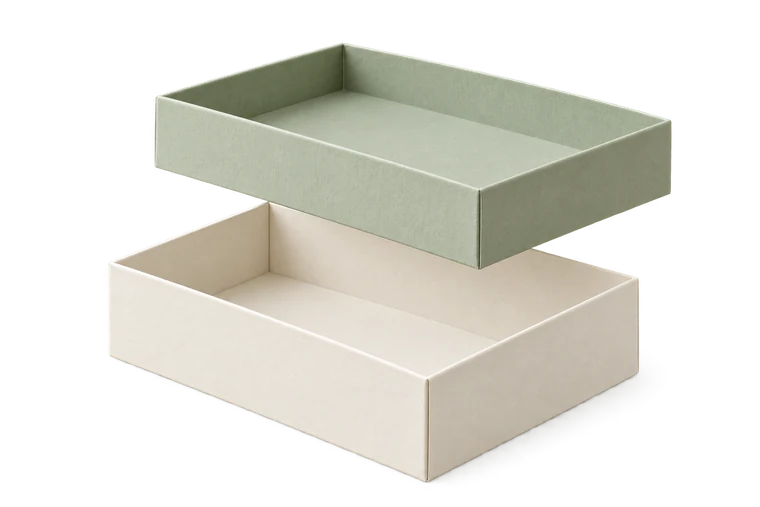
A tuck box uses a connected wall strip and end flaps. A two-piece box separates into two open trays, one fitting over the other. Both need glue joins, but the joins and closure motions differ.
Think about the next opening
A tuck closure presents an end opening. The user folds back the main panel and moves the dust flaps to insert or remove the object. That can work well for a compact stack of cards, but a delicate object with projections may catch the opening.
A removable lid exposes a wider face of the contents. It can make access easier when the object should be lifted straight upward. The lid is also a separate loose part, which may or may not suit the way the package will be kept.
Compare the actual flat layouts
Do not assume one part always uses less paper than two. A tuck net has closure flaps beyond its body. A two-piece design has two bases and their walls. Paper format, orientation, margins and the chosen lid depth influence the page arrangement.
Enter the same requirement in each generator, inspect the resulting dimensions and compare the computed page counts at 100%. Record the settings instead of quoting a general material-saving percentage.
Let a trial answer the specific question
Make plain samples and rehearse the intended use: insert, close, carry gently, open and remove. Inspect whether a tongue bends awkwardly or a lid grips too tightly. This is a comparison you can perform; it is not a claim that we physically tested every size.
Choose the opening that suits your object and save that project. If strength or shipping protection matters, obtain appropriate materials and testing beyond these paper-layout tools.
Ready to make something?
Set the dimensions. Check the folds. Make a small test box.